If you’re looking to improve fine lines, uneven skin tone, or acne, retinol is one of the most recommended skincare ingredients by dermatologists. However, using retinol incorrectly can cause irritation, redness, and dryness. This Retinol Beginner Guide will help you understand how to start using retinol safely while achieving the best possible results.
Retinol is a form of vitamin A that encourages skin cell turnover and stimulates collagen production. Although it offers impressive anti-aging and skin-renewing benefits, beginners should introduce it gradually to allow their skin to adjust.
This Retinol Beginner Guide explains what retinol is, how it works, how to apply it correctly, and the common mistakes to avoid.
What Is Retinol?
Retinol is a vitamin A derivative commonly found in anti-aging skincare products. It increases skin cell turnover, unclogs pores, and supports collagen production.
Because of these properties, retinol helps improve:
- Fine lines
- Wrinkles
- Acne
- Uneven skin tone
- Sun damage
- Rough skin texture
Following this Retinol Beginner Guide allows beginners to experience these benefits while minimizing irritation.
Why Should Beginners Use Retinol?
Retinol has become one of the most trusted skincare ingredients because it addresses multiple skin concerns with regular use.
Some of the biggest benefits include:
- Smoother skin texture
- Brighter complexion
- Reduced fine lines
- Improved skin elasticity
- Fewer clogged pores
- Better overall skin tone
These improvements usually become noticeable after several weeks of consistent use.
How to Start Using Retinol
One of the most important parts of any Retinol Beginner Guide is introducing the product slowly.
Follow these simple steps:
Step 1: Start with a Low Strength
Choose a low-strength retinol product, such as 0.25% or 0.3%, especially if you have sensitive skin.
Lower concentrations reduce the risk of irritation while allowing your skin to adapt.
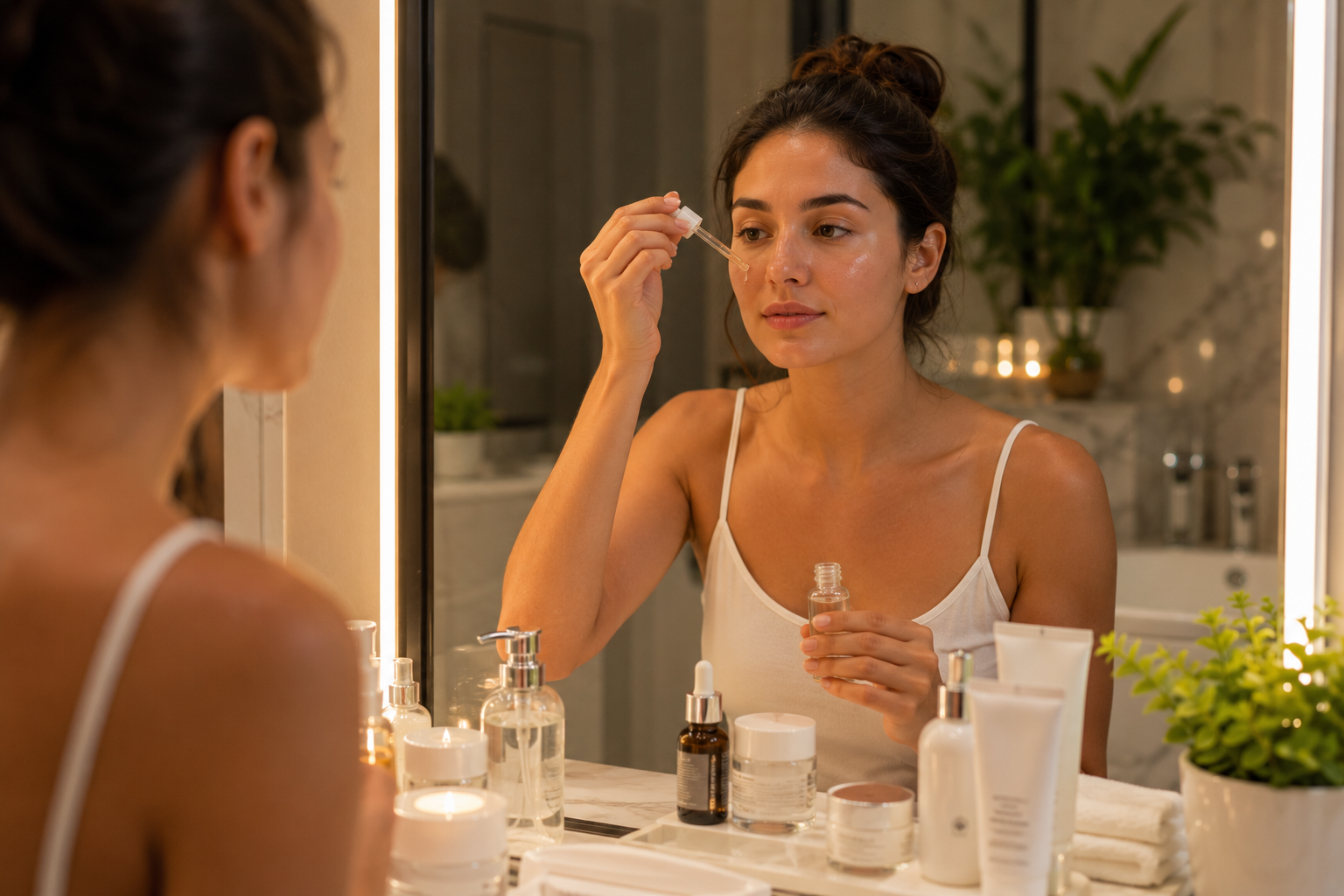
Step 2: Apply at Night
Retinol breaks down when exposed to sunlight.
Always apply it during your evening skincare routine after cleansing and drying your face.
Step 3: Use Only a Small Amount
A pea-sized amount is enough for your entire face.
Using more product will not improve results and may increase irritation.
Step 4: Moisturize Well
Apply a gentle moisturizer after retinol to reduce dryness and support your skin barrier.
Many beginners use the “sandwich method,” applying moisturizer before and after retinol.
How Often Should You Use Retinol?
During the first few weeks:
- Week 1–2: Twice weekly
- Week 3–4: Every other night
- After one month: Increase gradually if your skin tolerates it well
This gradual schedule is recommended in every professional Retinol Beginner Guide because it reduces unnecessary irritation.
Common Side Effects
When starting retinol, mild side effects are common.
You may notice:
- Dryness
- Mild redness
- Peeling
- Tightness
- Slight sensitivity
These effects usually improve as your skin adjusts.
If severe irritation develops, reduce application frequency or consult a dermatologist.
Common Mistakes Beginners Make
Many people stop using retinol because they make avoidable mistakes.
Avoid these habits:
- Applying too much product
- Using retinol every night immediately
- Skipping moisturizer
- Forgetting sunscreen
- Mixing retinol with strong exfoliating acids
- Applying to wet skin
Following a proper Retinol Beginner Guide helps prevent these problems.
Ingredients That Pair Well with Retinol
Certain skincare ingredients complement retinol without increasing irritation.
Good combinations include:
- Hyaluronic acid
- Ceramides
- Niacinamide
- Glycerin
- Peptides
These ingredients help maintain hydration while supporting your skin barrier.
Ingredients to Avoid on Retinol Nights
To reduce irritation, avoid combining retinol with:
- Strong AHAs
- BHAs
- Benzoyl peroxide
- High-strength vitamin C (unless recommended by your dermatologist)
Instead, keep your routine simple and hydrating.
Sunscreen Is Essential
Retinol makes your skin more sensitive to sunlight.
Always apply a broad-spectrum sunscreen with SPF 30 or higher every morning.
Daily sun protection not only prevents sunburn but also helps preserve the improvements achieved through retinol.
Who Should Avoid Retinol?
Retinol may not be suitable for everyone.
Consult a healthcare provider before using retinol if you:
- Are pregnant
- Are breastfeeding
- Have extremely sensitive skin
- Have active eczema or severe rosacea
A dermatologist can recommend safer alternatives if necessary.
Frequently Asked Questions
How long does retinol take to work?
Many people begin seeing visible improvements after eight to twelve weeks of consistent use.
Can beginners use retinol every day?
No. Beginners should introduce retinol gradually before increasing frequency.
Should I apply moisturizer before retinol?
Yes. Many beginners benefit from applying moisturizer before and after retinol to reduce irritation.
Is sunscreen necessary while using retinol?
Yes. Sunscreen is essential because retinol increases your skin’s sensitivity to UV rays.
For dermatologist-approved information about retinoids and healthy skincare practices, visit the American Academy of Dermatology’s guide to retinoids and retinol.