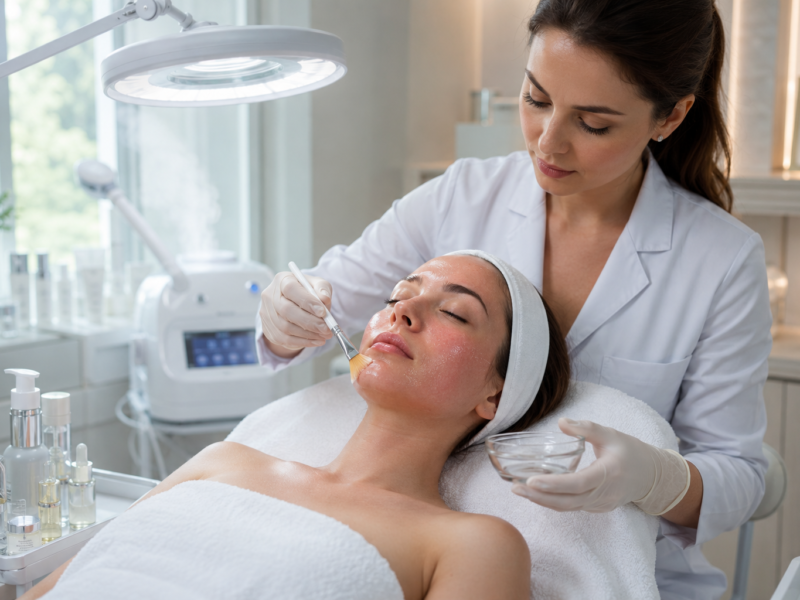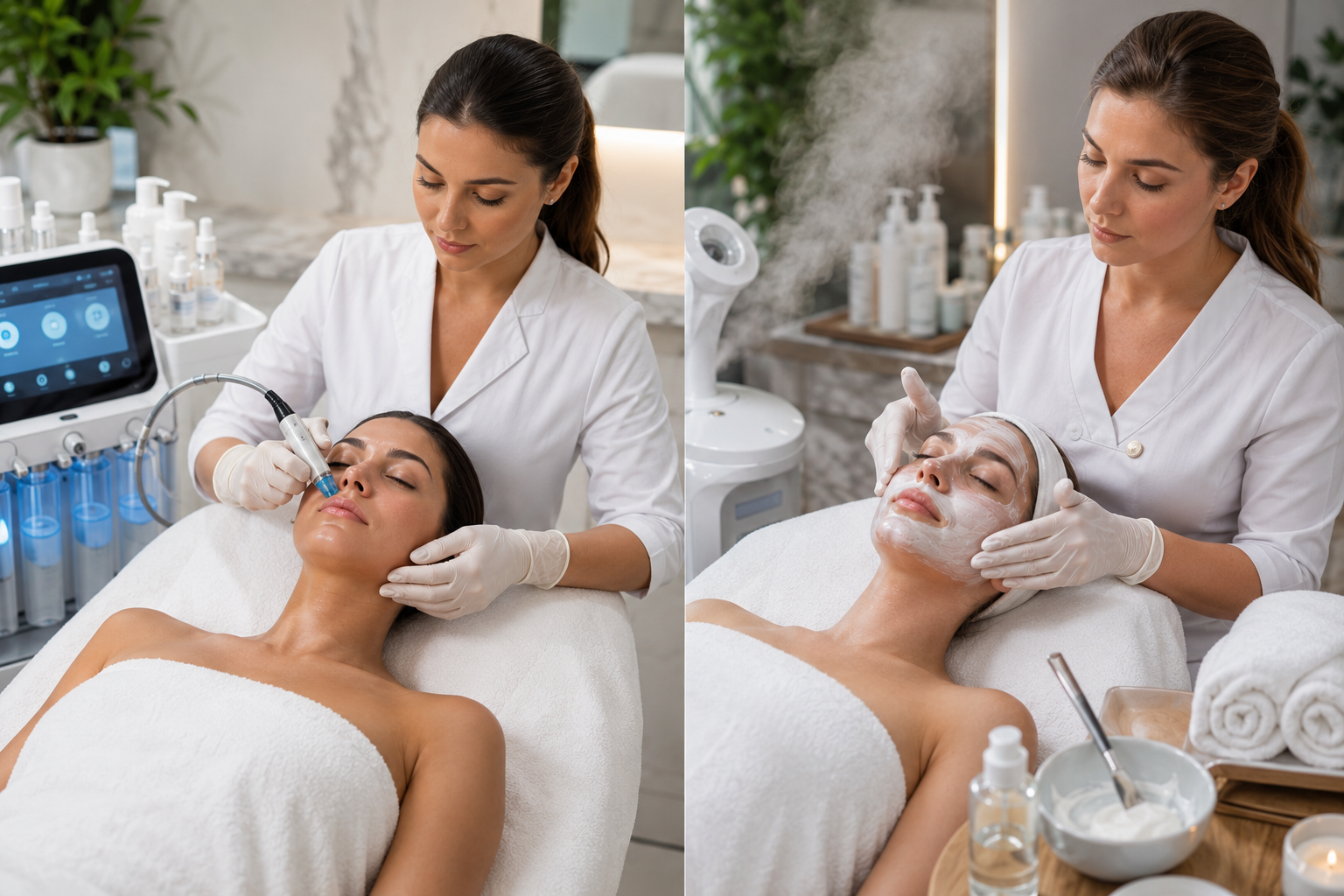
Healthy, glowing skin is a common skincare goal, and professional facials can help you achieve it. However, many people find it difficult to choose between a Hydrafacial and a traditional facial. Understanding Hydrafacial vs Regular Facial allows you to select the treatment that best matches your skin type, concerns, and beauty goals.
Although both treatments cleanse and refresh the skin, they use different techniques and deliver different results. A Hydrafacial relies on advanced technology to cleanse, exfoliate, and hydrate the skin, while a regular facial follows traditional skincare methods that include cleansing, steaming, exfoliation, extraction, massage, and customized masks.
In this guide, we’ll compare Hydrafacial vs Regular Facial, explain their benefits, and help you decide which option is right for you.
What Is a Hydrafacial?
A Hydrafacial is a non-invasive skincare treatment that uses a specialized machine to deeply cleanse, exfoliate, extract impurities, and infuse the skin with hydrating serums.
Unlike traditional facials, Hydrafacial treatments use vacuum technology instead of manual extraction, making the procedure comfortable and suitable for most skin types.
One of the biggest advantages in the Hydrafacial vs Regular Facial comparison is that Hydrafacial provides immediate hydration with little to no downtime.
What Is a Regular Facial?
A regular facial is a traditional skincare treatment performed by an esthetician. The exact procedure varies depending on your skin needs, but it typically includes:
- Cleansing
- Steam treatment
- Exfoliation
- Blackhead extraction
- Facial massage
- Face mask
- Moisturizer
- Sunscreen application
Regular facials focus on improving skin health while offering a relaxing spa experience.
Hydrafacial vs Regular Facial: Key Differences
Although both treatments improve skin appearance, they differ in several important ways.
| Feature | Hydrafacial | Regular Facial |
|---|---|---|
| Technology | Advanced vacuum device | Manual techniques |
| Hydration | Excellent | Moderate |
| Extractions | Gentle suction | Manual extraction |
| Downtime | Minimal | Minimal to mild redness |
| Skin Type | Suitable for most skin types | Depends on products used |
| Results | Immediate glow | Gradual improvement |
Understanding these differences makes the Hydrafacial vs Regular Facial decision much easier.
Benefits of a Hydrafacial
Hydrafacial treatments have become popular because they provide noticeable improvements with minimal discomfort.
Some major benefits include:
- Deep cleansing
- Gentle exfoliation
- Better skin hydration
- Reduced pore congestion
- Brighter complexion
- Improved skin texture
- Minimal irritation
- Suitable for sensitive skin
Many people notice glowing skin immediately after one treatment.
Benefits of a Regular Facial
Traditional facials continue to be one of the most popular skincare treatments worldwide.
Benefits include:
- Relaxation
- Improved circulation
- Customized skincare
- Removal of dead skin cells
- Reduced stress
- Better product absorption
- Healthy-looking skin
A regular facial also allows skincare professionals to evaluate your skin condition and recommend home care products.
Which Treatment Is Better for Acne?
For acne-prone skin, the answer depends on the severity of your condition.
Hydrafacial treatments help remove excess oil, unclog pores, and gently exfoliate the skin without causing excessive irritation.
Regular facials can also improve acne through manual extraction and customized products, but aggressive extractions may temporarily irritate sensitive skin.
When comparing Hydrafacial vs Regular Facial, Hydrafacial is often preferred for mild acne because of its gentle cleansing technology.
Which Treatment Is Better for Aging Skin?
Both treatments help aging skin, but they work differently.
Hydrafacial stimulates hydration while improving skin texture and reducing the appearance of fine lines.
Traditional facials improve circulation, relax facial muscles, and support healthy skin maintenance.
People concerned with dehydration and dullness often choose Hydrafacial, while those seeking relaxation may prefer regular facials.
Which Treatment Lasts Longer?
Hydrafacial results generally remain visible for several weeks when combined with proper skincare.
Regular facial results may last one to three weeks depending on your skin type and daily routine.
Maintaining a healthy skincare routine extends the benefits of both treatments.
Cost Comparison
Hydrafacial treatments usually cost more because they use advanced equipment and specialized serums.
Regular facials are generally more affordable and widely available at beauty salons and spas.
Although prices vary by location, your skincare goals should be more important than cost alone.
Who Should Choose a Hydrafacial?
A Hydrafacial may be ideal if you have:
- Oily skin
- Dry skin
- Mild acne
- Fine lines
- Enlarged pores
- Uneven skin tone
- Sensitive skin
The treatment is suitable for many skin types and requires very little recovery time.
Who Should Choose a Regular Facial?
Regular facials are an excellent choice for people who want:
- Routine skin maintenance
- Relaxation
- Deep cleansing
- Customized skincare
- Affordable treatments
Many individuals schedule monthly facials to maintain healthy skin.
Tips for Getting the Best Results
Whether you choose a Hydrafacial or a regular facial, follow these recommendations:
- Wear sunscreen every day.
- Stay hydrated.
- Avoid harsh exfoliants immediately after treatment.
- Follow your esthetician’s aftercare advice.
- Maintain a consistent skincare routine.
- Schedule treatments regularly.
These habits maximize the results of both procedures.
Frequently Asked Questions
Is Hydrafacial better than a regular facial?
Hydrafacial provides deeper hydration and advanced cleansing, while regular facials offer personalized care and relaxation. The better choice depends on your skin concerns.
Can sensitive skin get a Hydrafacial?
Yes. Hydrafacial is generally suitable for sensitive skin because it uses gentle suction instead of aggressive manual extraction.
How often should I get a facial?
Most skincare professionals recommend a facial every four to six weeks for healthy skin maintenance.
Does Hydrafacial hurt?
No. Most people describe the treatment as comfortable, relaxing, and pain-free.
For more information about professional skin care treatments and healthy skin practices, visit the American Academy of Dermatology Skin Care Basics.